

Personalization in luxury fashion has evolved far beyond traditional bespoke tailoring into a sophisticated ecosystem where artificial intelligence meets centuries-old craftsmanship. Today’s affluent consumers expect exclusive pieces that reflect their unique identity, especially for milestone events and special occasions. This transformation is reshaping how luxury brands create meaningful connections with discerning clientele who demand both technological innovation and artisanal excellence. Understanding how personalization technologies, business strategies, and craftsmanship intersect empowers you to make informed choices about curated luxury pieces that truly represent your personal style and values.
Table of Contents
- Key takeaways
- How personalization transforms luxury fashion experience
- Innovative technologies driving bespoke personalization
- Quantifiable benefits and business case for personalization
- Challenges and expert nuances in luxury personalization
- Practical guide to enjoying personalized luxury fashion
- Discover exclusive personalized luxury accessories and fashion
- Frequently asked questions
Key Takeaways
| Point | Details |
|---|---|
| Loyalty and sales lift | 80 percent of luxury buyers expect personalized interactions and those experiences significantly boost loyalty and purchase likelihood. |
| AI and 3D personalization | AI driven systems analyze style preferences body measurements color affinities and occasion needs to tailor recommendations at scale. |
| Three dimensional configurators | 3D configurators enable real time customization and visualization expanding the scope of bespoke luxury. |
| Balance personalization with brand identity | Luxury houses must maintain exclusivity and a consistent brand voice while offering customized pieces. |
How personalization transforms luxury fashion experience
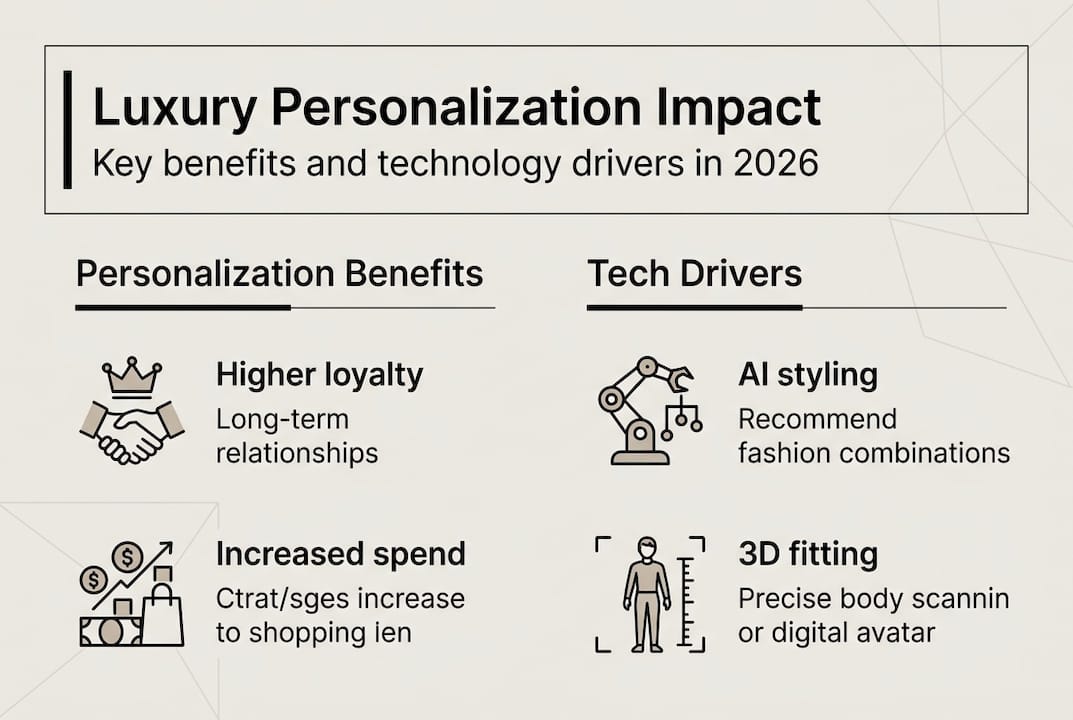
Luxury consumers in 2026 increasingly demand experiences tailored specifically to their preferences, lifestyle, and aesthetic sensibilities. The expectation for personalized service has become fundamental to how affluent shoppers evaluate and engage with premium brands. Research shows that 80% of luxury consumers expect personalized interactions, with consistent experiences increasing loyalty by 52% and purchase likelihood by 39%.
This shift reflects a broader transformation in luxury retail where generic mass marketing no longer resonates with discerning clientele. Personalization creates emotional connections that transcend transactional relationships, building brand affinity through meaningful engagement. When luxury brands demonstrate genuine understanding of individual preferences, they cultivate trust and long-term loyalty that translates directly into elevated customer lifetime value.
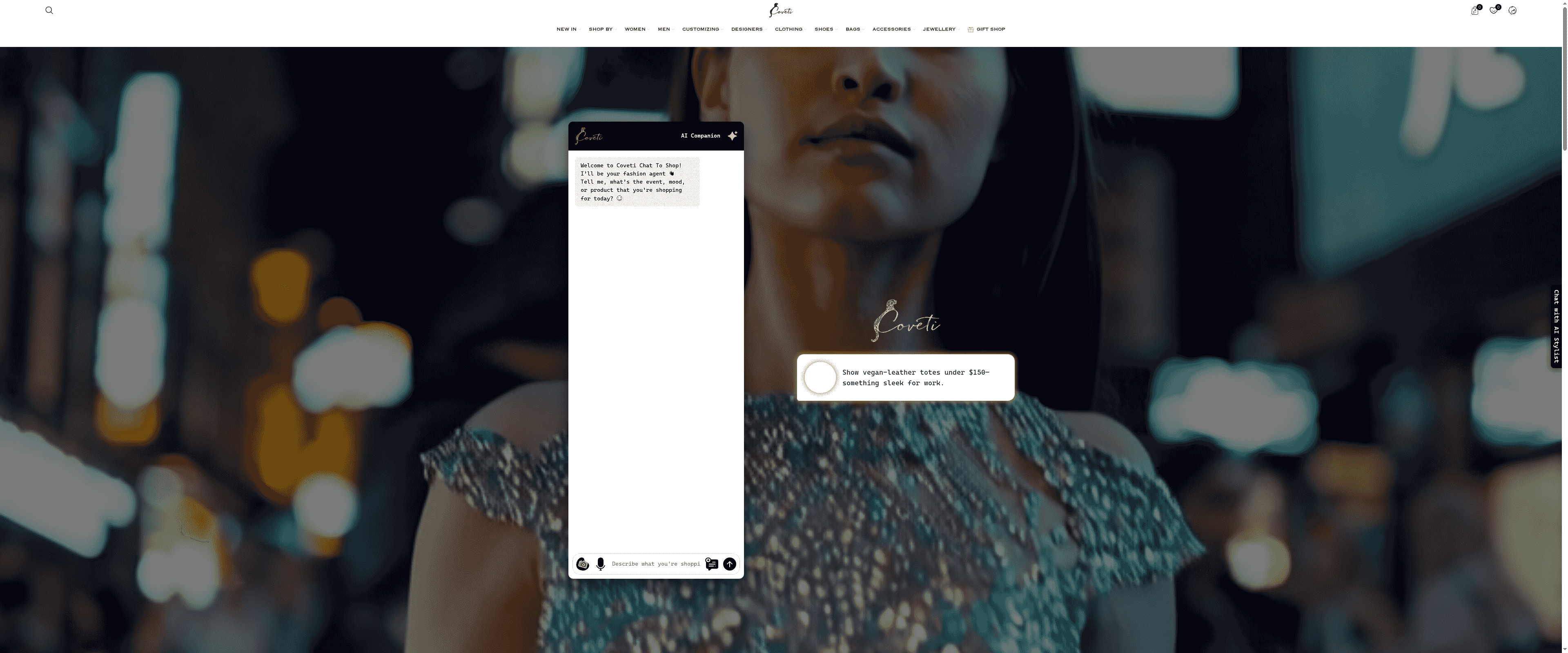
The practice of clienteling, where sales associates maintain detailed records of customer preferences and purchase history, has evolved dramatically with AI integration. Modern systems analyze browsing patterns, style preferences, and purchase behavior to deliver hyper-relevant product recommendations. This combination of human intuition and machine learning creates a seamless experience where customers feel truly understood and valued.
Key drivers of personalization demand:
- Desire for unique pieces that reflect individual identity and personal narrative
- Expectation of seamless omnichannel experiences across digital and physical touchpoints
- Growing appreciation for customization in luxury fashion that balances exclusivity with self-expression
- Need for expert guidance in navigating increasingly complex luxury product ecosystems
The business case for personalization in luxury fashion extends beyond immediate sales metrics to encompass brand positioning and competitive differentiation. Luxury houses that excel at personalization command premium pricing while maintaining strong customer retention rates. This strategic advantage becomes particularly pronounced during special occasions and milestone events when consumers seek truly distinctive pieces that commemorate important life moments.
Statistic spotlight: Luxury brands implementing comprehensive personalization strategies report customer lifetime values 3 to 5 times higher than those relying on traditional mass marketing approaches.
Innovative technologies driving bespoke personalization
Artificial intelligence has revolutionized how luxury brands deliver personalized experiences at scale while maintaining the exclusivity that defines premium fashion. AI-powered recommendation engines analyze vast datasets encompassing style preferences, body measurements, color affinities, and occasion-specific needs to suggest pieces perfectly aligned with individual tastes. These systems learn continuously from customer interactions, refining suggestions with each engagement to achieve unprecedented accuracy.

Three-dimensional configurators represent another breakthrough in luxury personalization technology. Prada uses 3D configurator technology enabling real-time custom sneaker designs where customers visualize modifications instantly. This interactive approach transforms passive browsing into active co-creation, allowing you to experiment with materials, colors, and design elements before committing to a purchase. The immediate visual feedback eliminates uncertainty and builds confidence in customization choices.
Advanced neural networks now enable precise fit prediction and pattern design through sophisticated measurement systems. Research demonstrates that AI deep learning measures with MAE 0.38 cm and user satisfaction scores of 4.55 out of 5, significantly outperforming traditional sizing methods. These systems incorporate Kansei engineering principles, which translate emotional and aesthetic preferences into tangible design parameters, ensuring that personalized pieces resonate on both functional and emotional levels.
Virtual try-on technology has matured considerably, leveraging augmented reality and computer vision to simulate how accessories, shoes, and garments appear on individual body types. High-accuracy measurement systems reduce return rates while improving customer confidence in online luxury purchases. This technology proves particularly valuable for exclusive designer pieces where in-person fittings may not be feasible.
Core personalization technologies:
- Machine learning algorithms that predict style preferences with 85%+ accuracy
- Computer vision systems for precise body scanning and measurement capture
- Natural language processing to understand nuanced customer requests and preferences
- Blockchain authentication ensuring personalized pieces maintain provenance and exclusivity
| Technology | Primary function | Accuracy/satisfaction |
|---|---|---|
| AI recommendation engines | Style matching and product suggestions | 85-92% prediction accuracy |
| 3D configurators | Real-time design visualization | 4.55/5 user satisfaction |
| Neural network measurements | Precise fit and sizing | 0.38 cm mean absolute error |
| AR virtual try-on | Pre-purchase visualization | 73% reduction in returns |
Pro Tip: The most effective personalization experiences combine cutting-edge technology with human expertise from stylists and craftspeople who understand the nuances of 3D design in luxury fashion and can guide you through how to personalize luxury fashion choices that truly reflect your unique aesthetic vision.
Quantifiable benefits and business case for personalization
Luxury brands implementing comprehensive personalization strategies realize substantial financial returns alongside enhanced customer relationships. Data reveals that hyper-personalization boosts revenue by up to 40%, with AI recommendations lifting average order value by 17 to 20 percent. These gains stem from increased purchase frequency, higher basket sizes, and improved customer retention rates that compound over time.
The revenue impact becomes particularly pronounced when comparing personalized versus mass promotion approaches. Generic marketing campaigns typically achieve single-digit conversion rates, while personalized recommendations convert at 15 to 25 percent depending on implementation sophistication. This dramatic difference reflects how tailored suggestions align precisely with individual needs and preferences, eliminating the friction inherent in browsing extensive catalogs without guidance.
Customer lifetime value metrics demonstrate the long-term advantages of personalization investment. Affluent consumers who receive consistent, relevant personalized experiences develop stronger brand affinity and become advocates who refer other high-value customers. This organic growth mechanism reduces customer acquisition costs while building a loyal community around exclusive luxury value propositions.
Case studies from leading luxury houses illustrate these principles in action. The Sézane AI personalization case study documents how targeted recommendations increased repeat purchase rates by 34% while improving net promoter scores by 28 points. These results emerged from a phased implementation that balanced technological capability with brand identity preservation.
| Metric | Mass promotion | Personalized approach | Improvement |
|---|---|---|---|
| Conversion rate | 3-7% | 15-25% | 250-350% |
| Average order value | Baseline | +17-20% | 17-20% |
| Customer retention | 45-55% | 70-82% | 55-80% |
| Net promoter score | 35-45 | 60-75 | 70-110% |
Beyond immediate financial metrics, personalization enhances brand perception and competitive positioning. Luxury consumers increasingly view personalized service as a baseline expectation rather than a premium feature. Brands that fail to deliver relevant, tailored experiences risk losing market share to competitors who better understand and anticipate customer needs.
Pro Tip: Track customer lifetime value and net promoter score alongside traditional revenue metrics to capture the full impact of personalization initiatives. These indicators reveal relationship strength and predict future revenue potential more accurately than transaction-based measures alone.
Challenges and expert nuances in luxury personalization
While personalization offers substantial benefits, luxury brands must navigate complex challenges that can undermine exclusivity and brand identity if handled poorly. Excessive customization options paradoxically overwhelm customers and dilute the curated aesthetic that defines luxury positioning. When every element becomes customizable, the designer’s vision fragments and pieces lose the distinctive character that justifies premium pricing.
Artificial intelligence implementation carries specific risks in luxury contexts where authenticity and human connection remain paramount. AI overuse may lead to backlash when consumers perceive recommendations as algorithmic rather than thoughtfully curated. Several luxury brands have faced criticism for AI-generated campaigns that felt impersonal or failed to capture the emotional resonance expected from premium experiences.
The tension between technological efficiency and artisanal craftsmanship presents another significant challenge. Luxury fashion’s value proposition rests partly on the human skill and time invested in creating each piece. Over-reliance on automated personalization systems risks diminishing the perceived value of craftsmanship that distinguishes luxury from mass-market alternatives. Maintaining this balance requires careful integration where technology enhances rather than replaces human expertise.
Data privacy and ethical considerations demand rigorous attention in personalization strategies. Collecting detailed customer information, tracking behavior patterns, and building comprehensive preference profiles raise legitimate privacy concerns. GDPR compliance and transparent consent mechanisms are non-negotiable requirements, but luxury brands must exceed minimum legal standards to maintain trust with affluent clientele who value discretion.
Critical personalization pitfalls:
- Offering unlimited customization that erodes brand recognizability and design coherence
- Implementing AI systems without human oversight, leading to tone-deaf recommendations
- Prioritizing data collection over customer experience and privacy protection
- Neglecting the emotional and storytelling elements that define exclusive luxury importance
The challenge of scale versus exclusivity becomes acute as personalization technologies enable mass customization. Luxury brands must carefully manage production volumes and availability to preserve the scarcity that underpins premium positioning. When personalized pieces become too accessible, they lose the cachet that attracts affluent consumers seeking truly distinctive items.
“Human judgment remains crucial for authentic luxury experiences in a digital age. Technology should amplify the expertise of stylists and craftspeople, not replace the intuition and emotional intelligence that create meaningful connections with discerning clients.”
Successful luxury personalization requires ongoing refinement based on customer feedback and behavioral data. Brands must resist the temptation to over-engineer solutions, instead focusing on friction points that genuinely impede customer satisfaction. This disciplined approach prevents feature bloat while maintaining the streamlined elegance expected in luxury experiences.
Practical guide to enjoying personalized luxury fashion
Navigating personalized luxury fashion effectively begins with understanding how to leverage available technologies while maintaining your authentic style vision. A phased approach allows you to explore personalization capabilities without becoming overwhelmed by options or compromising your aesthetic preferences.
Step 1: Start with AI-curated recommendations
Begin your personalization journey by engaging with intelligent recommendation systems that narrow style choices based on your preferences. Provide accurate information about your aesthetic inclinations, lifestyle needs, and occasion requirements. These systems work best when you interact consistently, rating suggestions and providing feedback that refines future recommendations. The initial learning phase typically requires 3 to 5 interactions before achieving highly relevant suggestions.
Step 2: Engage with bespoke 3D configurators
Once you have identified pieces that align with your style direction, explore customization options through interactive design tools. Experiment with materials, colors, and details to create truly unique items. Consult with expert stylists who can provide guidance on combinations that work harmoniously while maintaining design integrity. This collaborative approach combines your personal vision with professional expertise.
Step 3: Understand data privacy practices
Before sharing detailed personal information, review how luxury brands collect, store, and utilize your data. Implement phased AI personalization ensuring GDPR compliance and measure success via customer lifetime value and net promoter score. Verify that consent mechanisms are transparent and that you retain control over information sharing. Reputable luxury platforms prioritize discretion and data security as core brand values.
Step 4: Balance technology with artisan customization
While digital tools provide convenience and visualization capabilities, traditional bespoke services offer unmatched quality and attention to detail for truly special pieces. Consider reserving technology-driven personalization for everyday luxury items while investing in full artisan customization for milestone event pieces. This balanced approach optimizes both efficiency and exclusivity.
Step 5: Co-create through designer collaboration
For the most distinctive personalized pieces, engage directly with designers through consultation services. Share inspiration images, describe your vision, and participate actively in the design development process. This collaborative method produces items that genuinely reflect your personality while benefiting from professional design expertise. The investment in time and resources yields pieces with profound personal meaning.
Pro Tip: Co-create pieces by collaborating closely with designers for event-ready exclusivity. Schedule virtual or in-person consultations well in advance of occasions, allowing adequate time for design iteration, material sourcing, and meticulous craftsmanship that distinguishes truly bespoke luxury from mere customization.
Exploring comprehensive guides on how to personalize luxury fashion and understanding luxury customization principles empowers you to make informed decisions throughout your personalization journey. These resources provide frameworks for evaluating options and ensuring choices align with your long-term style evolution rather than fleeting trends.
Discover exclusive personalized luxury accessories and fashion
Elevate your personal style with curated luxury pieces designed to make bold, memorable statements at every special occasion. Luxury Shoes ’s platform connects you with exclusive designers and emerging talents whose work embodies the perfect fusion of innovation and timeless elegance.
Explore our comprehensive luxury brand discovery list 2026 featuring independent designers who prioritize individuality and craftsmanship. Understand what defines a luxury accessory through expert insights that help you identify pieces worthy of investment. Build your wardrobe foundation with our guide to 7 must-have luxury fashion essentials that seamlessly integrate personalized elements while maintaining versatile sophistication. Each curated collection reflects our commitment to helping you discover unique pieces that authentically express your distinctive aesthetic vision.
Frequently asked questions
What is the role of personalization in fashion?
Personalization tailors fashion experiences and products to individual preferences using technology and craftsmanship. It encompasses AI-driven recommendations, bespoke design services, and customization in luxury fashion that create unique pieces reflecting personal style. This approach builds emotional connections between consumers and brands while enhancing satisfaction through relevance.
How does personalization differ from customization and bespoke services?
Personalization uses data and algorithms to suggest relevant products based on preferences, while customization allows you to modify existing designs within defined parameters. Bespoke services involve creating entirely original pieces through direct collaboration with designers and craftspeople. Each approach serves different needs, with bespoke offering maximum uniqueness at higher investment levels.
What data privacy considerations apply to fashion personalization?
Luxury brands must obtain explicit consent before collecting personal data, clearly explain usage purposes, and provide control over information sharing. GDPR compliance mandates secure storage, limited retention periods, and rights to access or delete data. Reputable platforms prioritize transparency and discretion, recognizing that affluent consumers value privacy as integral to luxury service.
Can technology replace human expertise in luxury personalization?
Technology enhances but cannot replace human judgment in luxury fashion. AI excels at pattern recognition and efficiency, while stylists and craftspeople provide emotional intelligence, aesthetic intuition, and creative problem-solving. The most effective personalization combines algorithmic precision with human expertise to deliver experiences that feel both sophisticated and authentically personal.
How do I balance personalization with maintaining a cohesive style?
Start with a clear understanding of your core aesthetic preferences and lifestyle needs. Use personalization tools to explore variations within your established style rather than chasing every trend. Consult with stylists who can provide objective guidance on choices that enhance rather than fragment your wardrobe coherence. Focus on pieces that complement existing items while adding distinctive elements.
Recommended
Related Posts

Diferența între rochii de zi și seară: ghid complet
Află diferența între rochii de zi și seară. Îndrumarea completă te ajută să alegi ținuta perfectă pentru orice ocazie elegantă!
Luxe kleding combineren: handleiding voor elke stijl
Ontdek onze luxe kleding combineren handleiding. Leer stijlvolle outfits samenstellen met essentiële basisstukken en slimme kleurcombinaties.

高端买手店区别全解析:选品、策展与选购指南
了解高端买手店区别,掌握选品、策展与选购技巧,提升购物决策,发现独特风格与价值。
Bedeutung einzigartiger Modestücke: Stil als Identität
Entdecke die Bedeutung einzigartiger Modestücke. Mode drückt Persönlichkeit aus und verbindet Identität mit Stil – ein spannender Blick auf deinen Ausdruck!

Cómo elegir piezas exclusivas de diseñador con criterio
Descubre cómo elegir piezas exclusivas de diseñador que reflejen tu estilo y personalidad. Invierte en moda atemporal y auténtica.

Resort Wear 2026: The Independent Designer Pieces Worth Packing

Why Independent Designers Own Resort 2026
The Pieces to Prioritise
The Statement Dress
The Bag That Travels
Shoes That Earn Their Place...

Beneficii ale modei sustenabile: ghid complet 2026
Descoperă beneficiile ale modei sustenabile în 2026. Află cum poți reduce impactul asupra mediului, economisind și adoptând un stil autentic.

Checklist para accesorios de fiesta: guía 2026
Descubre la checklist para accesorios de fiesta para 2026. Asegúrate de que tu evento sea inolvidable con nuestra guía completa y organizada.

Checkliste für 3D-Schuhdesign: Schritt für Schritt 2026
Entdecken Sie die umfassende Checkliste für 3D-Schuhdesign. Optimieren Sie Ihren Designprozess Schritt für Schritt und vermeiden Sie kostspielige Fehler!
Voordelen bijzondere sieraden: betekenis en exclusiviteit
Ontdek de voordelen bijzondere sieraden: unieke betekenis, emotionele waarde en duurzaamheid. Kies voor exclusiviteit en persoonlijke verhalen in jouw...

Men’s Belt Size Guide: How to Find Your Perfect Fit in 2026
Why Belt Sizing Trips People Up
How to Measure for a Belt
Belt Size Charts for 2026
US Belt Sizes
UK Belt Sizes
European Belt Sizes
B...

Luxuriöse Accessoires stylen: Tipps für 2026
Entdecke luxuriöse Accessoires Styling Tipps für 2026 und lerne, wie du mit der Drei-Accessoires-Regel jeden Look verfeinerst und überladene Styles...
 Gift shop