
TL;DR:
- Accessories play a crucial role in transforming and expressing individual style.
- Luxury accessories are defined by craftsmanship, rare materials, exclusivity, and storytelling.
- Limiting to a few well-chosen pieces enhances personal identity and style impact.
Accessories are rarely the afterthought people assume them to be. In fact, a single well-chosen piece can shift an entire outfit from forgettable to iconic, from polished to unforgettable. Yet many fashion-conscious shoppers still treat accessories as optional extras rather than the creative core of personal style. We want to change that. In this guide, we break down exactly what a fashion accessory is, explore the full range of types and functions, explain what separates everyday pieces from true luxury, and give you practical tools to build a collection that genuinely reflects who you are.
Table of Contents
- Defining fashion accessories: Beyond the basics
- Types of fashion accessories and their functions
- What makes an accessory luxury? Materials, craft, and identity
- How to select and style luxury accessories for individuality
- Why accessories are the true key to personal style
- Discover, personalize, and elevate your accessory game
- Frequently asked questions
Key Takeaways
| Point | Details |
|---|---|
| Accessories defined | Fashion accessories are decorative or functional pieces that complement and enhance your outfit, but are not essential clothing. |
| Types and roles | They span jewelry, bags, hats, and more—serving style, practical functions, and status signals. |
| Luxury distinctions | High-end accessories excel in craftsmanship, rare materials, exclusivity, and personal expression. |
| Styling strategies | Limit to 3-5 accessories, pick one statement piece, and prioritize individual narrative over trends. |
| Accessories drive identity | The right accessories transform basic outfits into powerful statements of individuality and taste. |
Defining fashion accessories: Beyond the basics
Let’s start with the foundation. A fashion accessory is a decorative item that supplements and enhances one’s outfit, adding color, style, class, and sometimes practical functions, without being essential clothing. That last part matters. Accessories are not the clothes themselves. They are the layer of intention you place on top, the choices that communicate taste, personality, and status in ways a plain shirt or trouser simply cannot.
The word “accessory” itself signals a secondary role, but do not let that fool you. Merriam-Webster defines accessories as supplementary items, yet fashion experts consistently argue they are pivotal for individuality, noting that the right piece can “transform outfits” and function as “wearable art” in a luxury context. That framing is important. Wearable art is not decoration. It is a statement.
Think about what happens when you add a sculptural cuff to a minimalist dress, or a bold silk scarf to a neutral trench coat. The outfit changes character entirely. The accessory becomes the conversation. This is why stylists and designers invest enormous creative energy into accessories, sometimes more than into the garments themselves.
Accessories also serve as a vehicle for self-expression in a way that clothing often cannot. Clothing follows sizing conventions, dress codes, and seasonal norms. Accessories are far more flexible. They let you:
- Signal cultural identity or personal values
- Introduce color, texture, or pattern without committing to a full look
- Update an older wardrobe without buying new clothes
- Showcase your knowledge of craft, heritage, and design
- Create a recognizable personal signature that others associate with you
For those of us who care deeply about individuality in fashion, that flexibility is everything. Explore our luxury accessory guide to see how the world’s most compelling pieces achieve exactly this.
“The right accessory does not just finish a look. It starts a conversation, signals a worldview, and turns clothing into identity.” This is the philosophy we build every curated collection around at Luxury Shoes .
Types of fashion accessories and their functions
Once you understand what accessories are, the next step is understanding the full landscape of what they include. The category is broader than most people realize. Common examples include jewelry such as bracelets, necklaces, and earrings, as well as handbags, hats, belts, scarves, watches, sunglasses, gloves, pins, stockings, bow ties, ties, suspenders, and tights.
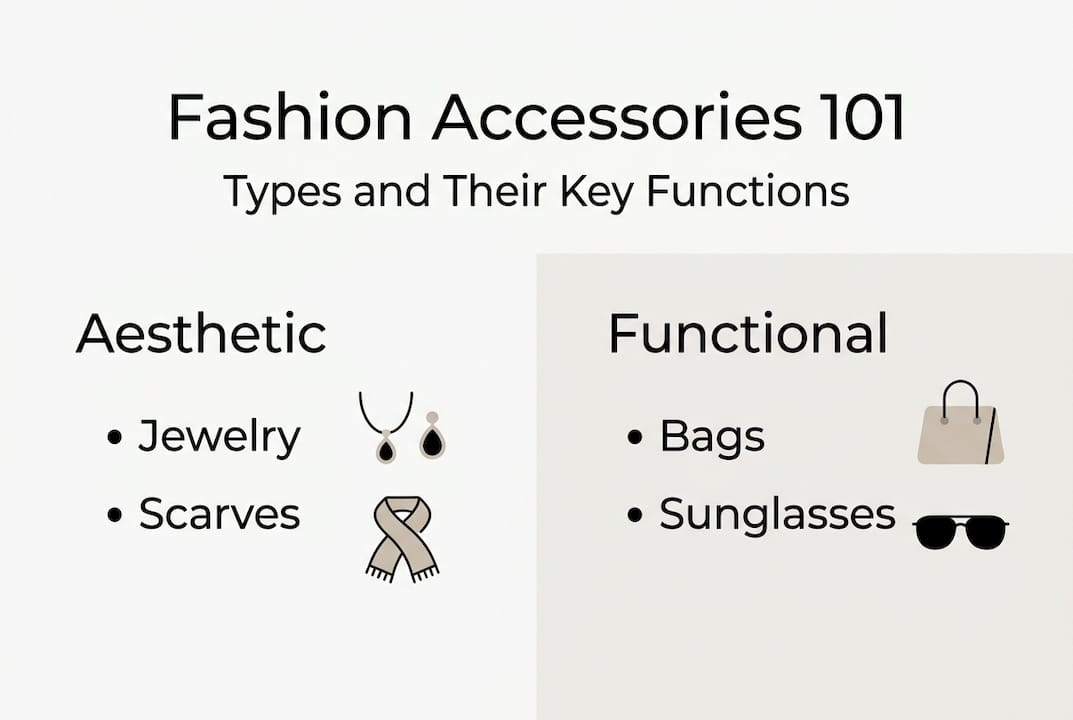
Each of these serves a dual purpose. Accessories function both aesthetically, enhancing style and expressing individuality, and practically, carrying items, protecting from weather, or providing warmth. They can also signal social status through designer labels, or express religious and cultural affiliation through items like crucifixes or headscarves.
Here is a quick comparison of how aesthetic and functional purposes play out across key categories:
| Accessory type | Primary aesthetic role | Primary functional role |
|---|---|---|
| Statement necklace | Focal point, color, drama | Minimal |
| Structured handbag | Status, polish, silhouette | Carrying essentials |
| Belt | Proportion, definition | Securing garments |
| Sunglasses | Chic, mystery, attitude | UV protection |
| Scarf | Color, texture, softness | Warmth, coverage |
| Watch | Precision, heritage, luxury | Timekeeping |
Knowing this helps you make smarter choices. When you understand what a piece is meant to do, you can select it with intention rather than impulse.
Here is a simple step-by-step approach to deciding where accessories fit into any look:
- Start with your outfit as a neutral base and identify what it lacks: color, structure, or interest.
- Choose one area of the body to anchor your statement, whether that is the neck, wrist, waist, or head.
- Build outward from that anchor, adding complementary pieces that support rather than compete.
- Check the overall balance in a mirror before you finalize.
- Remove one piece if anything feels crowded or over-styled.
Browse types of luxury accessories to see how these categories translate into truly elevated, collectible pieces. For those drawn to the more experimental end of the spectrum, our guide to avant-garde accessories is a great next read.
What makes an accessory luxury? Materials, craft, and identity
Not all accessories are created equal, and the gap between an everyday piece and a true luxury item goes far deeper than price. Luxury accessories are defined by exceptional craftsmanship, rare and premium materials such as exotic leathers, precious metals, and gemstones, exclusivity through limited production, strong brand heritage, and the ability to embody personal identity, contemporary style, and status.
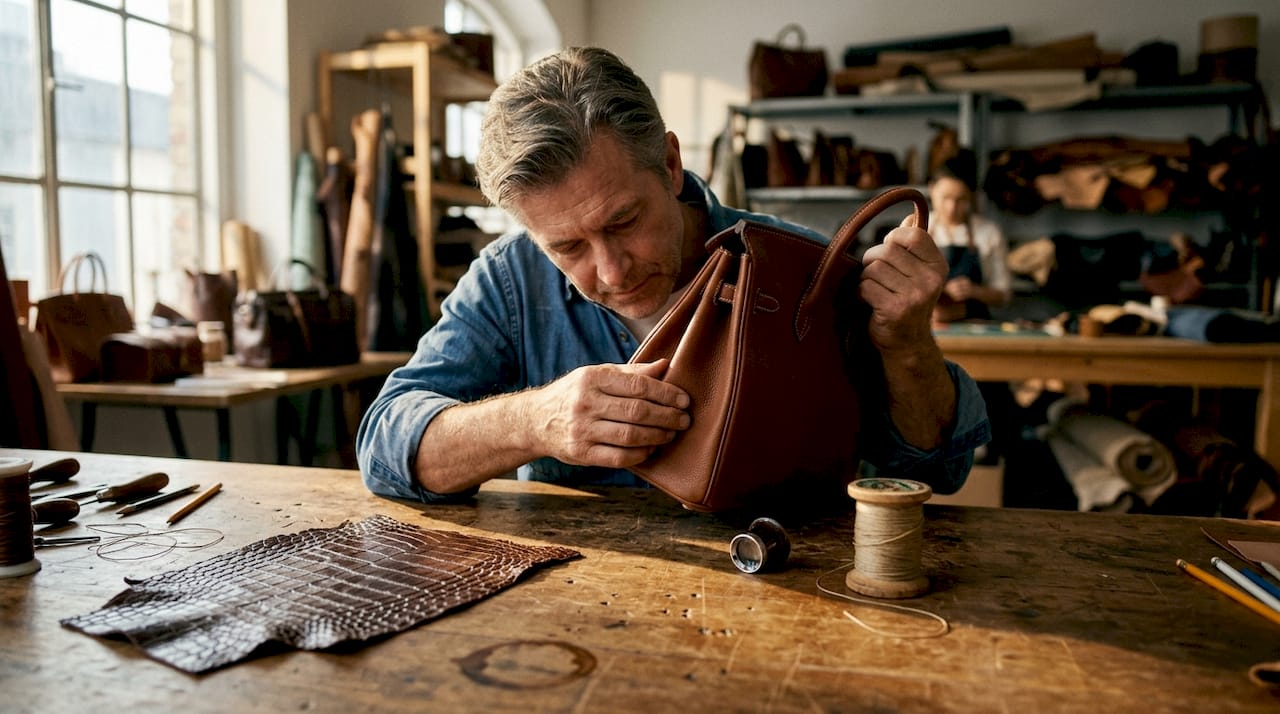
That is a meaningful list. Let’s break it down in practical terms:
| Quality | Everyday accessory | Luxury accessory |
|---|---|---|
| Materials | Synthetic, plated metals | Exotic leathers, precious metals, gemstones |
| Production | Mass manufactured | Limited, often handcrafted |
| Craftsmanship | Machine finished | Hand-stitched, artisan-made |
| Brand story | Generic or trend-driven | Deep heritage, creative vision |
| Longevity | Seasons | Decades or heirloom quality |
| Purpose | Decoration | Identity, art, investment |
Luxury accessories also operate on a different philosophical level. Where mass-market pieces follow trends, luxury prioritizes storytelling and what economists call “conspicuous consumption,” the idea that the piece communicates something meaningful about the wearer’s values and taste.
This is why a handcrafted leather bag from an independent designer can feel more luxurious than a logo-heavy piece from a mainstream house. The story matters as much as the label.
Pro Tip: When evaluating a luxury accessory, look past the logo. Examine the stitching, the weight of the hardware, the quality of the lining, and whether the designer can articulate a clear creative vision. True luxury reveals itself in the details, not the branding.
For those who want to go further, our guide to luxury customization explores how personalization is becoming one of the most exciting frontiers in high-end accessories. You can also explore our curated luxury brand discovery list to find designers who are redefining what luxury means in 2026.
How to select and style luxury accessories for individuality
Knowing what luxury is gets you halfway there. The other half is knowing how to choose and wear pieces in a way that feels genuinely personal rather than assembled. Here is a checklist we recommend for anyone building a luxury accessory collection:
- Prioritize versatility first. A statement piece that works across three or four different outfits will always outperform one that only fits a single look.
- Assess craftsmanship before price. A well-made piece at a mid-range price point often brings more joy long-term than an expensive but poorly finished one.
- Ask yourself: does this tell my story? If you cannot connect the piece to something you genuinely value, it is likely a trend purchase rather than a real addition to your wardrobe.
- Consider scale and proportion. A delicate necklace can disappear on a voluminous top. A chunky cuff can overwhelm a fine-knit sleeve. Match the scale of your accessories to the weight of your clothing.
- Think cost-per-wear. Luxury pieces designed for longevity often have a lower cost-per-wear over time than cheaper items that need replacing each season.
Before buying any statement piece, ask yourself three quick questions: Will I still love this in five years? Does it reflect my personal aesthetic rather than a passing trend? Can I style it at least three different ways?
Stylists recommend matching scale and proportion to your outfit, limiting yourself to three to five pieces per look, and always anchoring the ensemble around one clear statement item. That single focal point is what gives a look its power.
Pro Tip: Avoid over-accessorizing. More is not more in luxury fashion. A single extraordinary piece will always make a stronger impression than five competing ones. Let your best item breathe.
For a curated starting point, our luxury essentials guide covers the pieces worth investing in first. And if you want to understand why individuality is the true currency of luxury fashion, our piece on uniqueness in luxury fashion is essential reading.
Why accessories are the true key to personal style
Here is our honest, slightly contrarian take: most people spend too much money on clothes and not enough on accessories. Clothing, no matter how beautiful, is constrained by fit, season, and occasion. Accessories are not. They travel across outfits, across years, and across contexts in ways that garments rarely can.
A truly great bag, a sculptural ring, or a hand-finished belt does something clothing almost never does. It stops people mid-conversation. It becomes the thing someone remembers about you. That is the power of a signature piece, and it is something you simply cannot achieve by buying more clothes.
We also believe that accessories are where emerging designers do their most exciting work. Free from the structural demands of tailoring, they can push materials, form, and concept further. Discovering those designers early is one of the genuine pleasures of being a fashion insider.
Investing in signature accessories rather than chasing seasonal clothing trends is, in our view, the smarter long-term strategy. It builds a wardrobe with a point of view. It signals confidence and intention. And it turns fashion into something closer to art. Embrace uniqueness and let your accessories do the talking.
Discover, personalize, and elevate your accessory game
If this guide has sparked something, we would love to help you take the next step. At Luxury Shoes , we have built a platform specifically for fashion-conscious individuals who want more than what mainstream retail offers.
You can explore luxury accessory types across every category, from sculptural jewelry to architectural bags, all curated for individuality and exceptional craft. Our luxury brand discovery section introduces you to both established houses and the emerging independent designers who are reshaping the market. And if you want to go deeper, our guide to what defines luxury will help you shop with confidence and clarity. Your next signature piece is waiting.
Frequently asked questions
What is the main difference between a fashion accessory and essential clothing?
A fashion accessory is not essential clothing but a decorative or functional item that enhances an outfit. Clothing covers and protects the body as a necessity, while accessories are intentional additions that express style and personality.
How do I tell if an accessory is truly luxury?
Luxury accessories feature superior craftsmanship, rare materials such as exotic leathers and precious metals, limited production, and strong brand heritage. Look closely at finishing details and the designer’s creative story, not just the price tag.
How many accessories should I wear for a balanced luxury look?
Stylists recommend limiting to three to five accessories per look, with one clear statement piece anchoring the ensemble. Restraint is what gives luxury styling its authority.
Are functional items like backpacks and sunglasses considered accessories?
Yes. Items like backpacks and sunglasses are considered fashion accessories when styled with aesthetic intention. Function and fashion are not mutually exclusive in the accessory world.
Why are accessories important in expressing individuality?
Accessories allow for personal narrative in ways clothing often cannot. Experts note they transform outfits and serve as wearable art, letting you signal your values, taste, and identity beyond what your basic clothing communicates.
Recommended
Related Posts
Diferența între rochii de zi și seară: ghid complet
Află diferența între rochii de zi și seară. Îndrumarea completă te ajută să alegi ținuta perfectă pentru orice ocazie elegantă!
Luxe kleding combineren: handleiding voor elke stijl
Ontdek onze luxe kleding combineren handleiding. Leer stijlvolle outfits samenstellen met essentiële basisstukken en slimme kleurcombinaties.

高端买手店区别全解析:选品、策展与选购指南
了解高端买手店区别,掌握选品、策展与选购技巧,提升购物决策,发现独特风格与价值。
Bedeutung einzigartiger Modestücke: Stil als Identität
Entdecke die Bedeutung einzigartiger Modestücke. Mode drückt Persönlichkeit aus und verbindet Identität mit Stil – ein spannender Blick auf deinen Ausdruck!
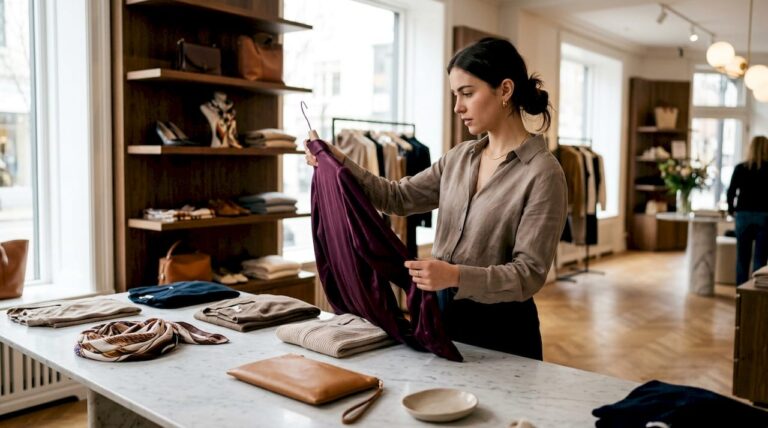
Cómo elegir piezas exclusivas de diseñador con criterio
Descubre cómo elegir piezas exclusivas de diseñador que reflejen tu estilo y personalidad. Invierte en moda atemporal y auténtica.
Resort Wear 2026: The Independent Designer Pieces Worth Packing

Why Independent Designers Own Resort 2026
The Pieces to Prioritise
The Statement Dress
The Bag That Travels
Shoes That Earn Their Place...

Beneficii ale modei sustenabile: ghid complet 2026
Descoperă beneficiile ale modei sustenabile în 2026. Află cum poți reduce impactul asupra mediului, economisind și adoptând un stil autentic.

Checklist para accesorios de fiesta: guía 2026
Descubre la checklist para accesorios de fiesta para 2026. Asegúrate de que tu evento sea inolvidable con nuestra guía completa y organizada.

Checkliste für 3D-Schuhdesign: Schritt für Schritt 2026
Entdecken Sie die umfassende Checkliste für 3D-Schuhdesign. Optimieren Sie Ihren Designprozess Schritt für Schritt und vermeiden Sie kostspielige Fehler!
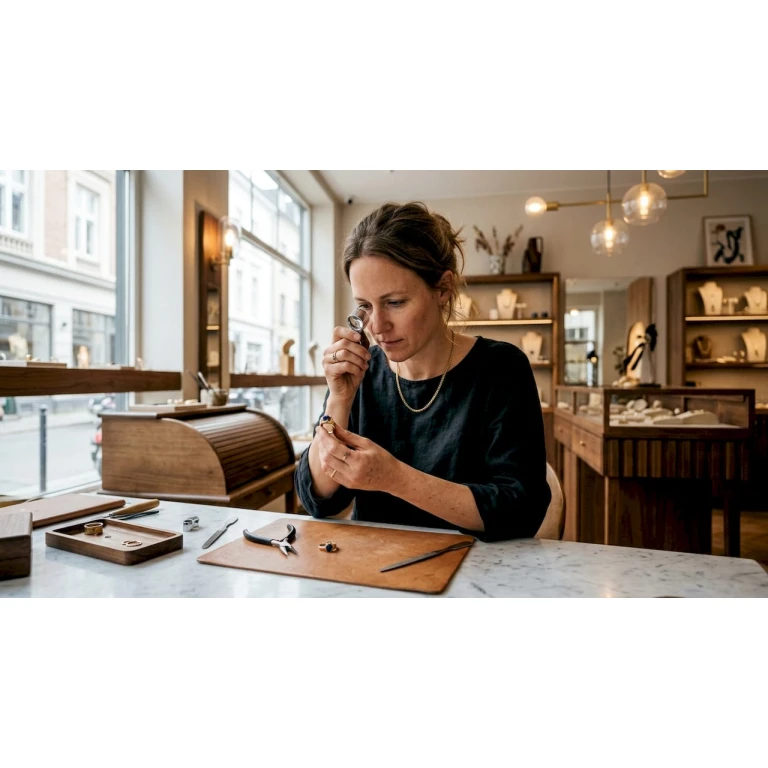
Voordelen bijzondere sieraden: betekenis en exclusiviteit
Ontdek de voordelen bijzondere sieraden: unieke betekenis, emotionele waarde en duurzaamheid. Kies voor exclusiviteit en persoonlijke verhalen in jouw...
Men’s Belt Size Guide: How to Find Your Perfect Fit in 2026
Why Belt Sizing Trips People Up
How to Measure for a Belt
Belt Size Charts for 2026
US Belt Sizes
UK Belt Sizes
European Belt Sizes
B...

Luxuriöse Accessoires stylen: Tipps für 2026
Entdecke luxuriöse Accessoires Styling Tipps für 2026 und lerne, wie du mit der Drei-Accessoires-Regel jeden Look verfeinerst und überladene Styles...
 Gift shop