
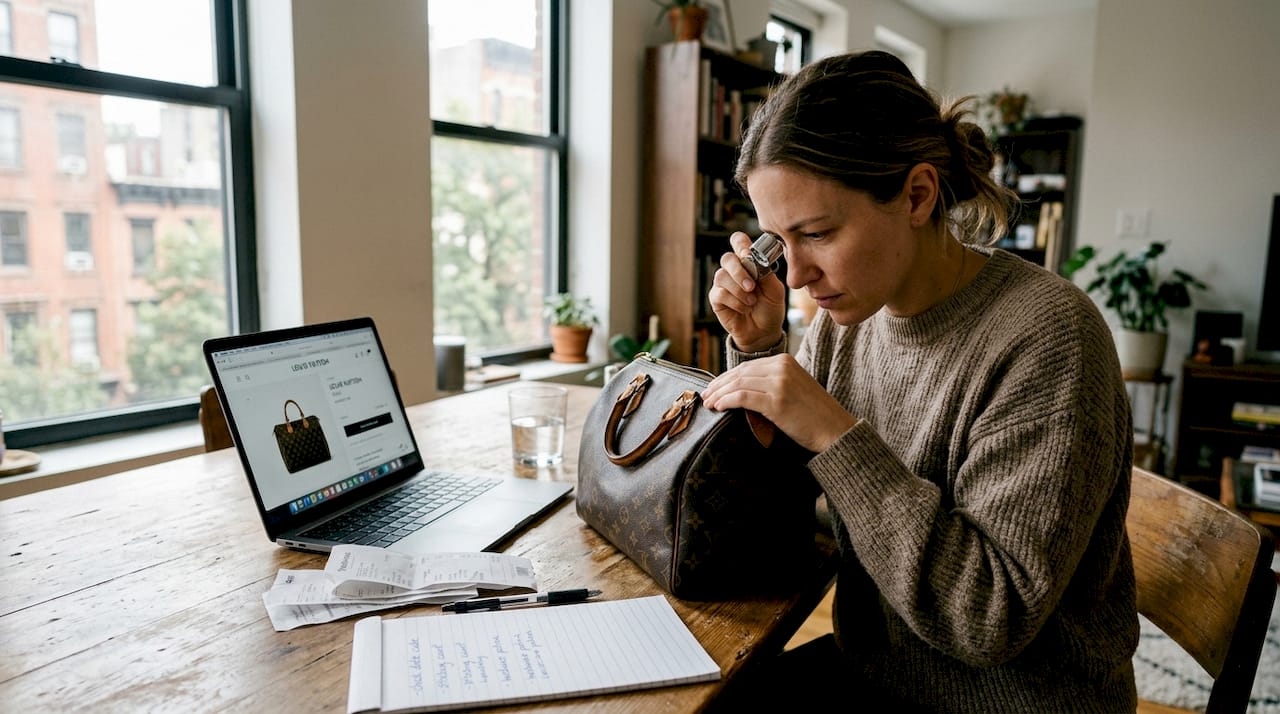

You’ve found the perfect designer bag online at a great price, but something feels off. The stitching looks slightly uneven, and the logo seems a fraction too bold. Luxury counterfeits have become so sophisticated that even experienced collectors struggle to distinguish real from fake. With counterfeiting representing over $500 billion annually and roughly 10% of handbags being counterfeit, knowing how to verify authenticity protects both your investment and style credibility. This guide provides a comprehensive framework combining traditional inspection methods with emerging technologies to help you confidently identify genuine luxury fashion pieces before making your purchase.
Table of Contents
- Key takeaways
- Understanding the challenge: why authenticating luxury fashion is tough
- Preparation: what you need to authenticate luxury pieces effectively
- Execution: step-by-step guide to identifying authentic luxury pieces
- Verification and advanced tactics: troubleshooting complexities and professional help
- Explore authentic luxury accessories and fashion essentials
- Frequently asked questions
Key Takeaways
| Point | Details |
|---|---|
| Multiple authentication methods | The guide stresses using multiple authentication methods because no single test can reliably distinguish superfakes. |
| Check serial numbers and markers | Verify serial numbers and brand markers across multiple components to confirm authenticity. |
| Professional authentication for pricey items | For expensive items, professional authentication services provide expert evaluation and documented provenance. |
| Research sellers and vet deals | Research sellers and avoid deals that seem too good to be true to reduce the risk of counterfeit purchases. |
Understanding the challenge: why authenticating luxury fashion is tough
The luxury counterfeit industry operates at a scale that should concern every fashion enthusiast. Counterfeiting luxury fashion is a $500B+ global problem with about 10% of handbags being fake, making authentication more critical than ever. Handbags and watches represent the most frequently targeted categories, with counterfeiters investing heavily in replicating every detail from hardware finishes to packaging materials.
What makes modern authentication particularly challenging is the emergence of superfakes. These sophisticated reproductions can mimic genuine materials, weight distributions, and even intricate hardware details that once served as reliable authenticity markers. Counterfeiters study brand production methods obsessively, reverse engineering everything from leather tanning processes to zipper mechanisms. The gap between authentic and counterfeit quality has narrowed dramatically over the past decade.
No single authentication test provides foolproof verification anymore. Counterfeiters adapt quickly, studying authentication guides and adjusting their methods to pass common tests. What worked to identify fakes five years ago may prove useless today. Serial number formats change, production facilities shift, and brands introduce new anti-counterfeiting measures that counterfeiters eventually replicate.
Key challenges facing authenticators include:
- Superfakes using genuine leather and premium hardware that feel identical to authentic pieces
- Counterfeit authenticity cards and packaging that perfectly replicate official materials
- Online marketplaces mixing authentic and fake inventory, sometimes unknowingly
- Vintage pieces lacking modern security features like microchips or blockchain certificates
Did you know? Some superfake producers now employ former luxury brand craftspeople who understand proprietary construction techniques intimately.
The fashion industry struggles to stay ahead of counterfeiters despite investing millions in anti-counterfeiting technology. Brands introduce new security features, but counterfeiters study and replicate them within months. This arms race means authentication requires constant learning about the latest brand-specific markers and verification technologies. Understanding fashion-forward trends luxury style helps you recognize what genuine current-season pieces should look like, while awareness of digital trends shaping luxury fashion reveals how technology changes authentication landscapes.
Having seen the stakes, next we identify what you need to verify before buying authentic luxury fashion.
Preparation: what you need to authenticate luxury pieces effectively
Successful authentication starts long before you examine a physical item. Gathering comprehensive documentation creates your verification foundation. Request all original materials including authenticity cards, receipts, dust bags, and boxes. Genuine sellers provide these readily, while hesitation often signals problems. Serial numbers should appear on multiple components, like the bag interior, authenticity card, and sometimes dust bag tags.

Studying brand-specific authentication features separates casual buyers from informed collectors. Each luxury house employs unique markers that counterfeiters struggle to replicate perfectly. Prioritize brand-specific markers like Rolex rehaut, Chanel quilting, and Hermes saddle stitching over generic cues. Chanel’s quilting follows precise diamond counts per row, Hermes uses saddle stitching with specific thread angles, and Louis Vuitton heat stamps appear in particular fonts and placements that vary by era.
Essential authentication tools include:
- Jeweler’s loupe or magnifying glass for examining stitching and logo details
- UV flashlight to reveal hidden security features and adhesive traces
- Digital scale accurate to 0.1 grams for weight verification
- Smartphone with macro camera capability for documentation
- Brand authentication guides specific to your target designer
| Brand | Key Authentication Markers | Common Counterfeit Flaws |
|---|---|---|
| Louis Vuitton | Heat stamp font, canvas grain direction, RFID chips post-2021 | Uneven monogram alignment, wrong stamp depth |
| Chanel | Quilting stitch count, serial sticker format, CC logo proportions | Incorrect diamond counts, thin stickers |
| Hermes | Saddle stitching angle, blind stamps, leather smell | Machine stitching, wrong stamp fonts |
| Gucci | Controllato card format, serial number placement, web stripe width | Misaligned stripes, incorrect card stock |
Create a personalized checklist of markers unique to each luxury brand you collect. This systematic approach prevents overlooking critical details during inspection excitement. Document your research with photos of confirmed authentic examples from brand boutiques or museum collections. These reference images prove invaluable when comparing questionable pieces.
Pro Tip: Join brand-specific authentication forums where experienced collectors share knowledge about recent counterfeit trends and new security features. These communities often spot emerging superfake characteristics before official guides update.
Use reliable databases or brand services to verify serial numbers before committing to purchases. Many luxury houses now offer authentication services or maintain databases where you can confirm serial number legitimacy. Understanding invest in designer bags expert insights helps you recognize which pieces warrant thorough authentication investment based on resale value and collectibility.
Once prepared with knowledge and tools, the next section covers step-by-step how to inspect and verify authenticity.
Execution: step-by-step guide to identifying authentic luxury pieces
Begin your authentication with external examination, as surface details reveal counterfeit work immediately. Inspect logos for crisp edges, correct proportions, and proper placement. Authentic luxury pieces feature logos stamped or embossed with consistent depth and clarity. Hardware should feel substantial, with smooth finishes free from rough edges or uneven plating. Examine stitching patterns for absolute uniformity, as luxury brands maintain incredibly tight quality control standards.
- Examine overall construction quality and proportions against official brand images
- Inspect hardware for weight, finish quality, and correct brand markings
- Analyze stitching for consistency, thread quality, and pattern accuracy
- Check interior linings for proper material, color, and logo placement
- Verify serial numbers through multiple methods including format and database checks
- Test materials for authentic texture, smell, and flexibility characteristics
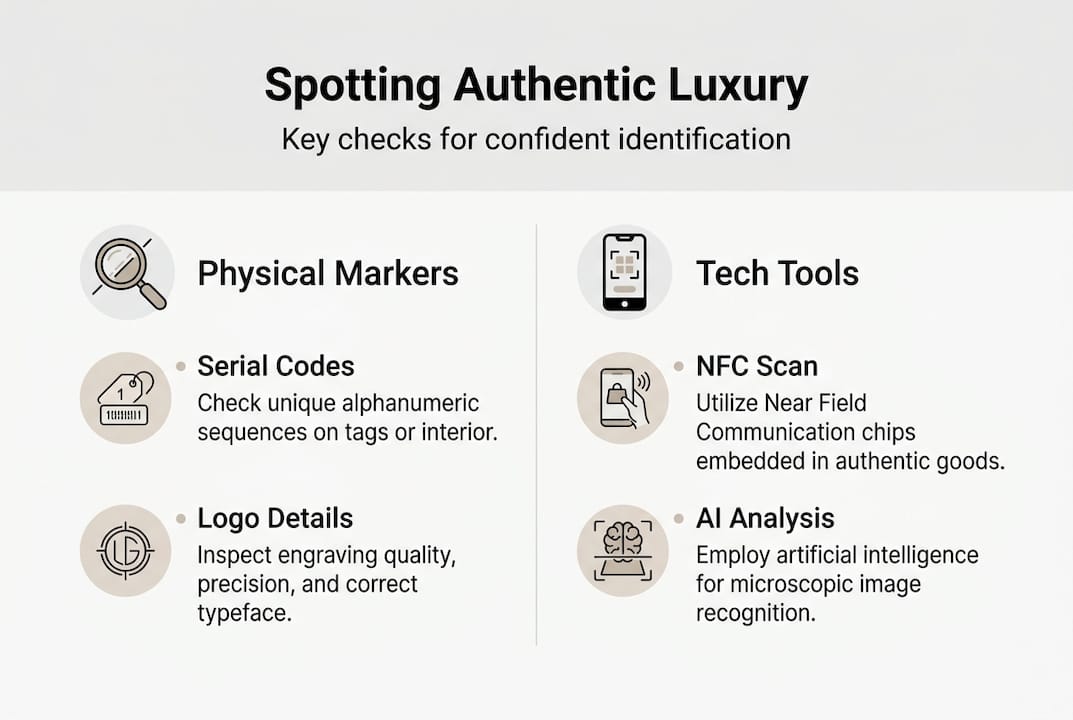
Verify serial numbers and authenticity cards through brand databases when available. Post-2021 Louis Vuitton uses RFID chips instead of traditional date codes, requiring different verification approaches. Scan these chips using your smartphone with NFC capability enabled. The chip should trigger a response leading to Louis Vuitton’s authentication page. Chanel’s serial stickers evolved to include holographic elements in recent years, with specific formats corresponding to production periods.
Check for emerging tech features like NFC chips or blockchain certificates that luxury brands increasingly embed in products. Some independent designers now include blockchain certificates of authenticity that you can verify through dedicated apps or websites. These digital certificates create immutable ownership records that counterfeiters cannot replicate. Brands like Prada and Moncler have experimented with NFC tags that connect to product histories and care instructions.
| Authentication Method | Accuracy Rate | Best Use Case | Approximate Cost |
|---|---|---|---|
| Visual inspection by owner | 60-70% | Initial screening, obvious fakes | Free |
| Brand authentication service | 99%+ | High-value items, resale preparation | $50-800 |
| AI-based services | 99.6% | Online purchases, volume authentication | $6-40 per item |
| Expert authenticator | 95-99% | Vintage pieces, nuanced cases | $30-150 |
Compare textures and logos visually and with AI-based tools if available. Services like Entrupy use microscopic image analysis to detect material and construction patterns invisible to human eyes. These tools excel at identifying subtle differences in leather grain, stitching precision, and logo stamping that distinguish authentic pieces from superfakes. However, use a defense-in-depth approach combining multiple verification methods due to the rise of superfakes.
Pro Tip: Photograph every detail of a piece you’re considering, then compare your images side-by-side with confirmed authentic examples from the brand’s current catalog or trusted authentication services. Discrepancies in proportions, spacing, or finishing become obvious in direct comparison.
Professional services exist for high-value items and complex cases where your own expertise reaches its limits. Understanding the luxury fashion shopping process 2026 reveals how authentication fits into informed purchasing decisions. For comprehensive guidance on specific brands, resources like the Louis Vuitton authentication guide provide detailed visual references.
With these steps performed, learn how to troubleshoot common authentication pitfalls in the next section.
Verification and advanced tactics: troubleshooting complexities and professional help
Superfakes represent the authentication frontier where traditional methods fail. These exceptional counterfeits imitate materials and hardware so closely that superfakes require forensic methods like X-ray, UV, and spectroscopy because no single method suffices. Counterfeiters now source genuine leather, use authentic-grade hardware, and employ skilled craftspeople who replicate construction techniques with disturbing accuracy. Some superfakes cost $500 to $800 to produce, making them nearly indistinguishable from authentic pieces to untrained eyes.
Forensic authentication methods reveal what surface inspection cannot. UV light exposes adhesive residues, replacement parts, and hidden markings that counterfeiters add for their own tracking. X-ray analysis shows internal construction details like rivet placement, hardware attachment methods, and structural reinforcements that differ between authentic and counterfeit pieces. Spectral analysis examines molecular composition of materials, identifying synthetic treatments or incorrect dye formulations.
Advanced authentication techniques include:
- Microscopic fiber analysis comparing thread composition and weave patterns
- Chemical testing of leather tanning agents and finishing compounds
- Weight distribution mapping to detect incorrect internal structures
- Thermal imaging revealing construction method differences
AI authentication services provide over 99% accuracy but humans excel in vintage nuances where AI training data proves limited. Entrupy’s AI microscopy achieves 99.6% accuracy by analyzing millions of microscopic details simultaneously, learning from vast databases of authenticated pieces. However, vintage items from decades past may lack sufficient AI reference data, making experienced human authenticators more reliable for pre-2000 luxury pieces.
“The superfake revolution has fundamentally changed luxury authentication. What once required only basic knowledge now demands forensic expertise and technological assistance. Collectors must accept that authentication is no longer a simple yes or no question, but a probability assessment requiring multiple verification layers.”
Professional authentication costs range from $6 with AI up to $800 for brand services, with pricing reflecting complexity and liability. Budget AI services like Entrupy charge per scan, making them cost-effective for frequent buyers. Independent expert authenticators typically charge $30 to $150 depending on item complexity and their expertise level. Brand-operated authentication services command premium prices but provide absolute certainty and documentation valuable for insurance and resale.
For luxury items over $1000, professional services like Entrupy AI or brand authentication provide high accuracy and often include financial guarantees. Many services offer money-back guarantees or will purchase items they incorrectly authenticate, providing financial protection beyond simple verification. This guarantee structure makes professional authentication essentially free if you’re purchasing legitimate pieces, as the cost becomes insurance against expensive mistakes.
Combine methods and expert input for over $1,000 luxury pieces for best confidence. Use your own inspection to screen obvious fakes, then employ AI services for detailed analysis, and finally consult human experts for final verification on significant purchases. This layered approach catches counterfeits at multiple checkpoints, dramatically reducing authentication failure risk. Understanding fashion-forward design in luxury ecommerce helps you recognize how legitimate platforms incorporate authentication into their user experience.
Having addressed complex cases, the following promo introduces curated luxury collections and further fashion style guidance.
Explore authentic luxury accessories and fashion essentials
Now that you understand authentication complexities, consider the value of shopping with platforms that curate verified luxury collections. Luxury Handbags specializes in offering authenticated designer pieces from both established houses and emerging independent designers, eliminating authentication anxiety from your shopping experience. Every piece undergoes verification before listing, ensuring you invest in genuine luxury that elevates your personal style.
Discover luxury brand discovery list 2026 featuring bold, exclusive accessories from designers you won’t find in mainstream retail. Explore luxury fashion essentials for exclusive style that form the foundation of a sophisticated wardrobe, or deepen your understanding of what defines a luxury accessory to refine your collecting strategy. Luxury Shoes ’s curated approach means you can focus on style and personal expression rather than authentication concerns, confident that every piece meets rigorous authenticity standards.
Frequently asked questions
How can I tell if a designer bag’s serial number is real?
Check the serial number format against official brand standards, as each luxury house uses specific numbering systems that change over time. Verify serial numbers and authentication cards with brand databases, noting some brands like LV use RFID post-2021 instead of traditional codes. Cross-reference the number’s format, placement, and stamping quality with confirmed authentic examples from your production era.
When should I use professional authentication services for luxury items?
Consider professional services for any item exceeding $1,000 in value, as authentication costs represent small insurance against expensive mistakes. For high-value items over $1,000, professional authentication services offer nearly 99% accuracy and financial guarantees that protect your investment. AI services work well for modern pieces and volume authentication, while human experts excel with vintage items or nuanced cases requiring contextual knowledge.
What role does technology like AI and NFC play in authenticating luxury goods?
AI microscopy and NFC chips in brands like Louis Vuitton and Chanel help verify authenticity efficiently by analyzing microscopic details and confirming embedded digital certificates. AI achieves around 99.6% accuracy detecting logo and texture patterns invisible to human eyes, particularly valuable for e-commerce purchases. However, technology complements rather than replaces expert verification and multi-method approaches, especially for vintage pieces or superfakes designed to fool automated systems.
Can I authenticate luxury items using only online photos?
Online photo authentication provides preliminary screening but cannot replace physical examination for valuable pieces. Request multiple high-resolution images showing serial numbers, stitching close-ups, hardware details, and interior construction from various angles. However, sophisticated counterfeiters can photograph superfakes in ways that hide flaws, making in-person inspection or professional authentication essential before finalizing significant purchases.
What are the biggest red flags that indicate a luxury item is counterfeit?
Major warning signs include pricing significantly below market value, sellers refusing additional photos or documentation, and inconsistencies between advertised and actual product details. Poor stitching quality, lightweight hardware, chemical smells from synthetic materials, and misaligned logos or patterns indicate counterfeit production. Trust your instincts when deals seem too good to be true, as legitimate luxury rarely sells at steep discounts outside official brand sales.
Recommended
Related Posts
Diferența între rochii de zi și seară: ghid complet
Află diferența între rochii de zi și seară. Îndrumarea completă te ajută să alegi ținuta perfectă pentru orice ocazie elegantă!
Luxe kleding combineren: handleiding voor elke stijl
Ontdek onze luxe kleding combineren handleiding. Leer stijlvolle outfits samenstellen met essentiële basisstukken en slimme kleurcombinaties.

高端买手店区别全解析:选品、策展与选购指南
了解高端买手店区别,掌握选品、策展与选购技巧,提升购物决策,发现独特风格与价值。
Bedeutung einzigartiger Modestücke: Stil als Identität
Entdecke die Bedeutung einzigartiger Modestücke. Mode drückt Persönlichkeit aus und verbindet Identität mit Stil – ein spannender Blick auf deinen Ausdruck!
Cómo elegir piezas exclusivas de diseñador con criterio
Descubre cómo elegir piezas exclusivas de diseñador que reflejen tu estilo y personalidad. Invierte en moda atemporal y auténtica.

Resort Wear 2026: The Independent Designer Pieces Worth Packing

Why Independent Designers Own Resort 2026
The Pieces to Prioritise
The Statement Dress
The Bag That Travels
Shoes That Earn Their Place...

Beneficii ale modei sustenabile: ghid complet 2026
Descoperă beneficiile ale modei sustenabile în 2026. Află cum poți reduce impactul asupra mediului, economisind și adoptând un stil autentic.

Checklist para accesorios de fiesta: guía 2026
Descubre la checklist para accesorios de fiesta para 2026. Asegúrate de que tu evento sea inolvidable con nuestra guía completa y organizada.
Checkliste für 3D-Schuhdesign: Schritt für Schritt 2026
Entdecken Sie die umfassende Checkliste für 3D-Schuhdesign. Optimieren Sie Ihren Designprozess Schritt für Schritt und vermeiden Sie kostspielige Fehler!

Voordelen bijzondere sieraden: betekenis en exclusiviteit
Ontdek de voordelen bijzondere sieraden: unieke betekenis, emotionele waarde en duurzaamheid. Kies voor exclusiviteit en persoonlijke verhalen in jouw...

Men’s Belt Size Guide: How to Find Your Perfect Fit in 2026
Why Belt Sizing Trips People Up
How to Measure for a Belt
Belt Size Charts for 2026
US Belt Sizes
UK Belt Sizes
European Belt Sizes
B...

Luxuriöse Accessoires stylen: Tipps für 2026
Entdecke luxuriöse Accessoires Styling Tipps für 2026 und lerne, wie du mit der Drei-Accessoires-Regel jeden Look verfeinerst und überladene Styles...
 Gift shop