


Updated: November 2025
Luxury Handbags Stylist Standards
Reviewed by: Luxury Handbags Editorial Styling Team. Every guide is vetted for luxury appropriateness, fabric integrity, and 2026 dress-code compliance.
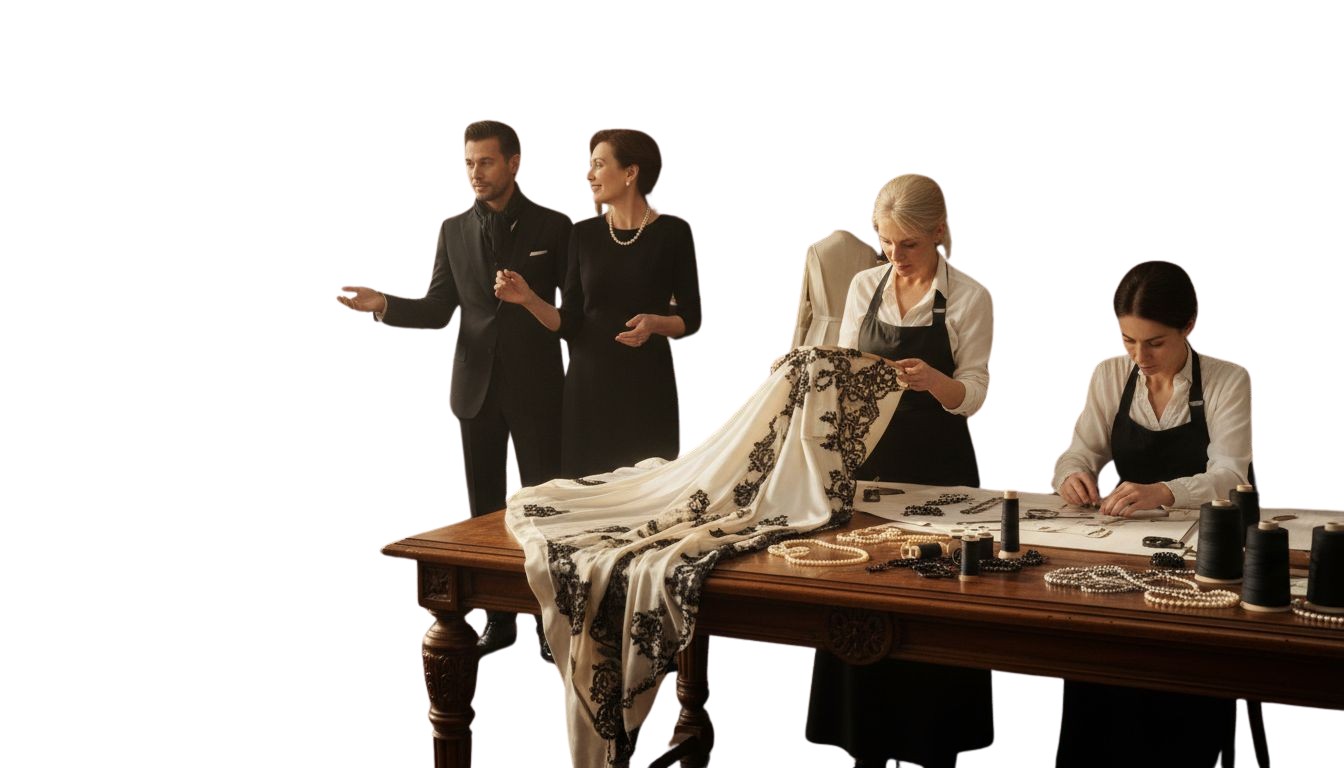
Few industries command such artistry and exclusivity as couture fashion. Some couture garments require over 700 hours of skilled handiwork, turning each piece into a one-of-a-kind masterpiece rather than just clothing. For those who value authenticity and craftsmanship, the difference is more than fabric or fit. Discover how couture stands apart as wearable art, blending tradition, innovation, and personal expression at the highest level.
Table of Contents
- Defining Couture Fashion And Its Essence
- Types Of Couture: Haute Couture Vs. Demi-Couture
- How Couture Pieces Are Created
- Legal Standards And Official Designation
- Couture Fashion Versus Ready-To-Wear Options
Key Takeaways
| Point | Details |
|---|---|
| Couture as Art | Couture fashion transcends clothing, becoming a profound expression of art characterized by meticulous craftsmanship and exclusivity. |
| Types of Couture | Haute couture offers unique, custom garments, while demi-couture provides a more accessible approach without compromising on quality. |
| Creation Process | The production of couture pieces involves intricate design techniques, extensive tailoring, and hundreds of hours of skilled labor to achieve perfection. |
| Legal Standards | Haute couture is a legally protected designation with strict criteria established by the Paris Chamber of Commerce that few fashion houses meet. |
Defining Couture Fashion And Its Essence
Couture fashion represents the pinnacle of sartorial artistry – a realm where clothing transcends mere fabric and becomes a profound expression of craftsmanship, creativity, and cultural sophistication. Haute couture, as defined by Wikipedia, represents “the creation of exclusive, custom-fitted high-end fashion designs, characterized by meticulous attention to detail and the use of high-quality, often unusual fabrics.”
At its core, couture fashion is not about clothing but about creating wearable art. These garments are meticulously crafted through an incredibly intricate process that involves:
- Hand-executed design techniques
- Custom measurements for individual clients
- Use of rare, premium materials
- Hundreds of hours of skilled artisan labor
- Precise, often intricate hand-stitching
The essence of couture goes far beyond commercial fashion production. It represents a dialogue between designer and client, where each piece tells a unique story. While ready-to-wear collections cater to mass markets, couture pieces are singular, breathtaking creations tailored explicitly to one individual’s body, personal style, and aesthetic vision.
Understanding couture requires appreciating its extraordinary level of dedication. Learn more about high-end fashion design in our guide on unique evening gowns, which explores the nuanced world of exclusive fashion craftsmanship that elevates clothing from a functional necessity to a true art form.
Types Of Couture: Haute Couture vs. Demi-Couture
The world of high-end fashion is nuanced, with haute couture and demi-couture representing distinct yet interconnected approaches to luxury clothing design. According to All Study Journal, these categories serve different roles in the fashion ecosystem, offering unique perspectives on craftsmanship and exclusivity.
Haute Couture represents the absolute pinnacle of fashion design. Strictly defined by the Paris Chamber of Commerce, it involves:
- Hand-crafted garments made entirely to individual client measurements
- Exceptional quality materials sourced from premium suppliers
- Hundreds of hours of specialized artisan work per piece
- Adherence to rigorous design and construction standards
Demi-couture emerges as a more accessible alternative, bridging the gap between haute couture and ready-to-wear fashion. As Wikipedia suggests, these pieces incorporate high-end design techniques while remaining more versatile and attainable. Demi-couture collections typically feature limited-edition pieces that blend sophisticated craftsmanship with slightly more flexible sizing and production methods.
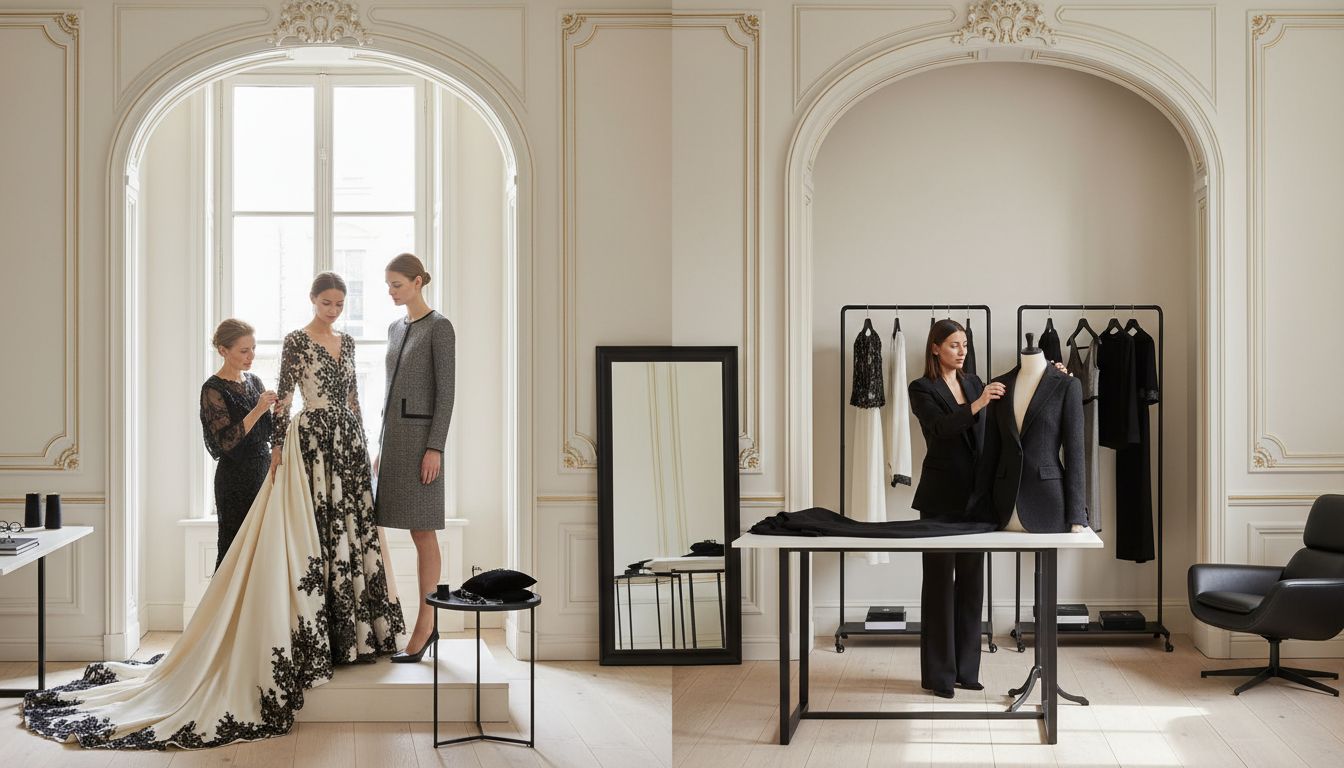
Explore our guide on high-end ready-to-wear fashion to understand how luxury design principles translate across different fashion categories, revealing the intricate world where artistry meets wearability.
How Couture Pieces Are Created
The creation of a couture piece is nothing short of a complex, almost magical transformation of fabric into wearable art. According to Wikipedia, these garments are crafted with “extreme attention to detail, using high-quality, often unusual fabrics” through time-consuming, hand-executed techniques that elevate clothing beyond mere functionality.
The intricate process begins with an extensive design phase, where designers meticulously plan every aspect of the garment. From University of Pennsylvania Design, we understand that couture creation involves sophisticated techniques such as:
- Seaming: Precision joining of fabric pieces
- Pleating: Creating intricate folded textures
- Boning: Structured support techniques
- Layering: Building depth and dimensionality
- Smocking: Decorative gathered stitching
- Cording: Adding structured embellishments
Each couture piece represents a collaborative journey between designer and client. Measurements are taken with surgical precision, patterns are drafted uniquely for each individual, and multiple fittings ensure absolute perfection. Skilled artisans might spend hundreds of hours on a single garment, with some complex pieces requiring over 700 hours of dedicated craftsmanship.
Learn how to mix timeless and avant-garde fashion for your next event to understand how these intricate design principles translate into wearable, breathtaking fashion statements that transcend ordinary clothing.
Legal Standards And Official Designation
Haute couture is not just a fashion category – it’s a legally protected designation with extraordinarily strict requirements. According to Wikipedia, the Paris Chamber of Commerce maintains rigorous standards that few fashion houses can actually meet.
To officially qualify as a haute couture house, designers must satisfy multiple precise criteria:
- Maintain a Paris-based workshop with at least 15 full-time staff
- Employ a minimum of 20 full-time technical workers
- Present a collection of no less than 50 original designs
- Showcase collections twice annually
- Create made-to-order garments for private clients
The legal protection of the term is meticulously enforced. As Opus Research explains, only designers officially recognized by the historic Chambre Syndicale de la Haute Couture can market their clothing as true haute couture. Those who do not meet these exacting standards must instead use the more generic term ‘couture’.
Explore our guide on fashion-forward design principles to understand how these legal designations shape the highest echelons of global fashion creativity and craftsmanship.
Couture Fashion Versus Ready-To-Wear Options
The world of fashion is dramatically divided between two distinct approaches: haute couture and ready-to-wear. According to Wikipedia, these categories represent fundamentally different philosophies of clothing design and production.
Key differences emerge across multiple dimensions:
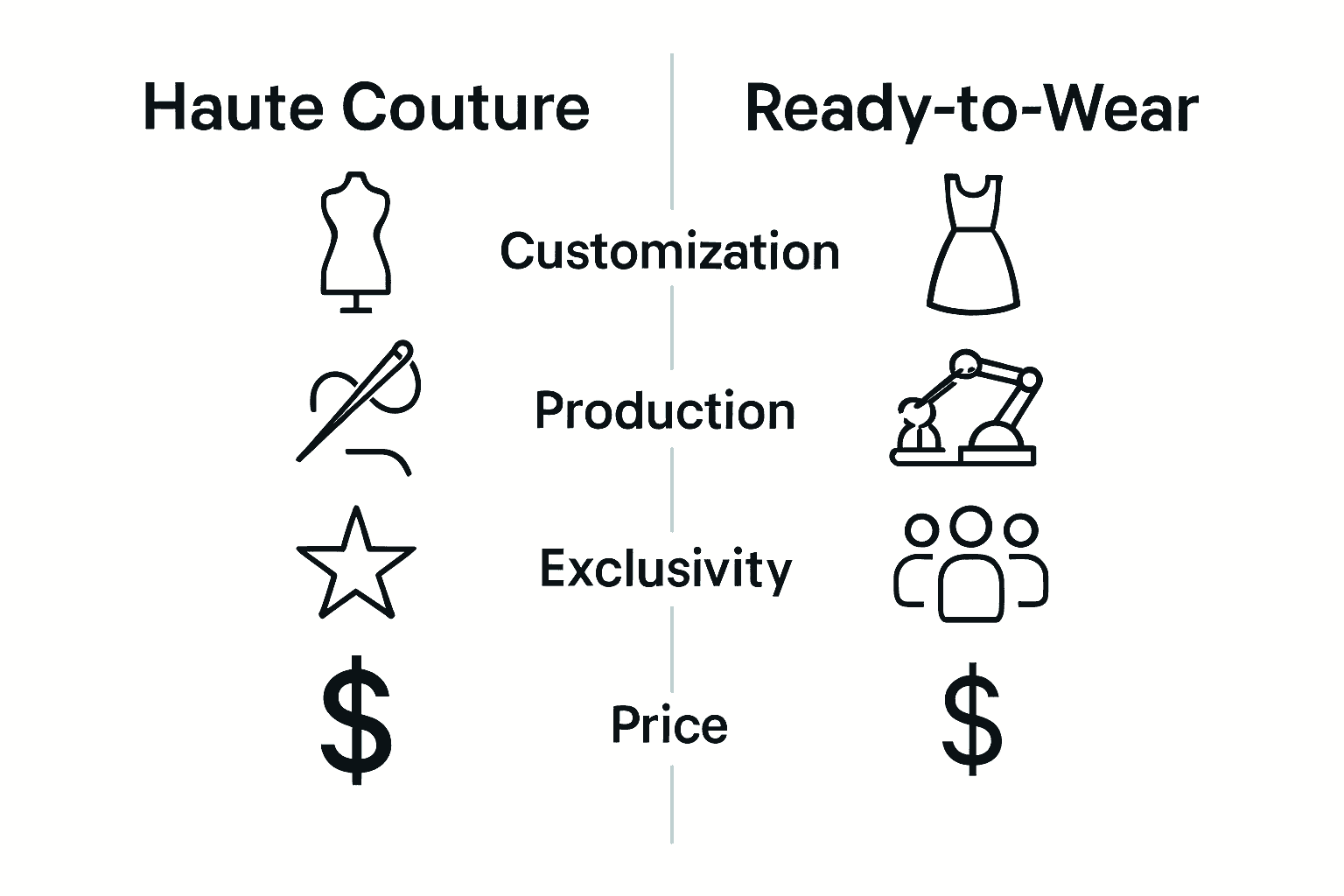
- Customization: Couture = individually tailored, ready-to-wear = standard sizing
- Production: Couture = hand-crafted, ready-to-wear = industrially manufactured
- Price Point: Couture = extremely high-end, ready-to-wear = more accessible
- Exclusivity: Couture = limited pieces, ready-to-wear = mass-produced
- Design Process: Couture = client-specific, ready-to-wear = trend-driven
Opus Research emphasizes that haute couture represents the pinnacle of fashion, involving elaborately hand-sewn dresses crafted from unusual fabrics, often with astronomical prices. In stark contrast, ready-to-wear fashion includes prefabricated products manufactured industrially in predefined sizes, making them significantly more accessible to a broader audience.
Explore our guide on formal dress codes for women to understand how these fashion categories translate into practical styling choices for different occasions.
Discover the Artistry Behind Couture with Luxury Shoes
Couture fashion demands exceptional craftsmanship, attention to detail, and a personal connection between designer and wearer. If you admire the uniqueness and intricate process behind each haute couture piece, you deserve to own exclusive designer treasures that reflect that same dedication to artistry and individuality. At Luxury Shoes , we understand your passion for pieces that blend timeless elegance with avant-garde style, offering a curated selection that celebrates true craftsmanship and bold fashion statements.
Unlock your own bespoke experience and explore unique evening gowns, statement jewellery, and luxury accessories crafted by renowned and emerging designers worldwide. Don’t settle for mass-produced fashion when you can discover extraordinary creations tailored to your distinctive taste. Visit Coveti today and immerse yourself in fashion that goes beyond trends. Elevate your wardrobe with pieces that tell your story now.
Frequently Asked Questions
What is haute couture?
Haute couture refers to exclusive, custom-fitted high-end fashion designs characterized by meticulous craftsmanship, the use of premium materials, and a focus on detailed handmade techniques.
How is couture fashion different from ready-to-wear?
Couture fashion features individually tailored designs, handcrafted production, and extreme exclusivity, while ready-to-wear involves standard sizing, industrial manufacturing, and is more accessible to a wider audience.
What are the requirements to be considered haute couture?
To qualify as haute couture, a fashion house must have a Paris workshop, employ a minimum of 20 full-time technical workers, create at least 50 original designs per collection, and offer made-to-order garments for private clients, among other strict criteria.
What distinguishes demi-couture from haute couture?
Demi-couture serves as a middle ground between haute couture and ready-to-wear, featuring high-end design techniques with limited edition pieces that are more versatile and accessible than strictly couture garments.
Recommended
- Fashion-Forward Trends Explained: Complete Luxury Guide | Fashion & Style Tips | Fashion Feed| Luxury Shoes
- What Is High-End Ready-to-Wear? Complete Breakdown | Fashion & Style Tips | Fashion Feed| Luxury Shoes
- What Is Sustainable Luxury? Complete Fashion Overview | Fashion & Style Tips | Fashion Feed| Luxury Shoes
- Fashion-Forward Design: Everything You Need to Know | Fashion & Style Tips | Luxury Shoes
- The real difference between Tailor and Stylist – Corrado Manenti
Related Luxury Handbags Edits
Women’s Clothing — For a broader wardrobe view beyond Couture Fashion Explained: Craftsmanship, Process, Rules, explore our Women’s Clothing edit. It brings together elevated separates, statement silhouettes, and polished essentials that help turn one-event inspiration into a complete luxury dressing strategy.
Designer Dresses — Our Designer Dresses collection is the strongest next step when this guide calls for sharper occasion dressing. It narrows the search to premium fabrics, more refined cuts, and designer-led pieces that photograph beautifully from arrival to after-hours.
Wedding Guest Dresses — If the article leans event-ready, our Wedding Guest Dresses page is the most direct match. It focuses on ceremony-appropriate looks that balance dress-code polish, comfort, movement, and the kind of finish that still feels memorable in photos.
Shop Related Pieces
- emilie gathered maxi dress with beads - ristretto by Shona Joy
- Minnie Shirtdress by Alemais
- Wanda Embroidered Shirtdress by Alemais
- Piercings Minidress by Schiaparelli
- Chevron Sundress Multicolor Lilac & Blue in Knit Chevron by La Double J

Related Posts
Trend accessori particolari 2026: guida per il lusso
Scopri il trend accessori particolari 2026 e trasforma il tuo stile. Segui la nostra guida per scegliere gli accessori di lusso giusti!

Rolul designerilor emergenți în moda de lux 2026
Descoperă cum rolul designerilor emergenți redefinește moda de lux în 2026. Creează-ți cariera în acest domeniu fascinant!

Role das plataformas online na moda: guia de luxo
Descubra o role das plataformas online na moda de luxo. Leia análises e tendências que transformam o setor e abrem novas oportunidades.
Qué es la moda editorial: guía para amantes de la moda
Descubre qué es la moda editorial y su impacto en las tendencias. Esta guía revela su poder en la industria. ¡Explora más aquí!
Was sind Trendaccessoires 2026? Luxus-Guide
Entdecke, was sind Trendaccessoires 2026! Finde heraus, wie diese Luxusstücke dein Styling transformieren und Looks definieren.
个性晚礼服优点解析:追求独特时尚女性的高端选择指南
探索个性晚礼服优点,让您在每场盛宴中独树一帜。这是您高端时尚的独特选择指南!
Гид по выбору обуви на мероприятие: советы стилиста
Откройте для себя гид по выбору обуви на мероприятие. Узнайте, как выбрать стильную и удобную обувь для любого события!
Comment choisir un sac de luxe : guide complet 2026
Découvrez comment choisir un sac de luxe avec notre guide complet 2026. Apprenez à éviter les contrefaçons et trouvez le modèle parfait!

Top 4 coveteurcollection.com alternatives 2026
Ontdek de 4 beste coveteurcollection.com alternatieven en vergelijk luxe modeplatforms om de beste keuze te maken voor unieke modeaccessoires.

Топ 5 fashionhistory.fitnyc.edu alternatives 2026
Сравните 5 fashionhistory.fitnyc.edu alternatives и выберите лучший ресурс для изучения истории моды и актуальных тенденций.
Come valorizzare un abito da festa con stile e lusso
Scopri come valorizzare un abito da festa con stile e lusso! Segui la nostra guida e fai risaltare il tuo look unico in ogni occasione.

Wat is een onafhankelijke designer? Luxe mode uitgelegd
Ontdek wat een onafhankelijke designer is en hoe zij luxe mode uniek maken. Leer hoe je exclusieve ontwerpen vindt voor speciale gelegenheden!
 Gift shop